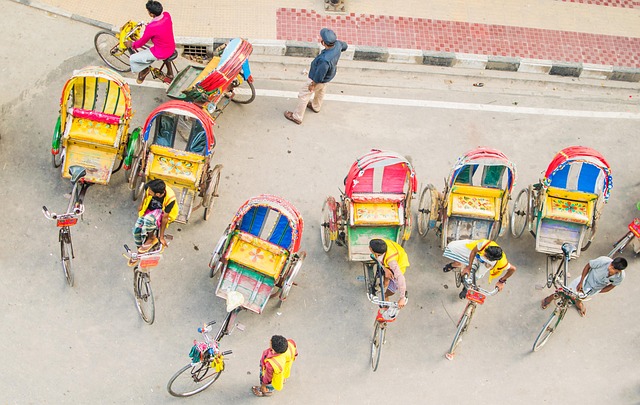
In Germany, art is kept in silence behind museum glass. In Bangladesh, art roams the streets, honking its horn.
For decades, the cycle rickshaws of Dhaka were seen just as transport. But to the world, they are “Moving Museums.” Recently, UNESCO officially recognized Dhaka’s Rickshaw Art as an Intangible Cultural Heritage of Humanity.
This is not just painting; it is the heartbeat of a nation.
The Canvas of the Streets Every inch of a Dhaka rickshaw is decorated. It is a riot of color that refuses to be ignored.
-
The Hood: Often painted with movie stars, imaginary utopias, or fierce animals.
-
The Brass Work: Hand-cut brass vases filled with plastic flowers.
-
The Tassels: Colorful fringe that swings as the rickshaw moves.
A Dying Craft? The artists, known as Mistris, learn this skill from their fathers in the old workshops of Bongshal and Old Dhaka. There are no textbooks. They paint from memory, mixing bright neons that glow under the streetlights. But as modern auto-rickshaws take over, this art form faces a threat.
Why Tourists Love It For a German visitor, a rickshaw ride is chaos, but the art is pure fascination. It is raw, unfiltered storytelling. No two rickshaws are the same.
Verdict When you visit Dhaka, don’t just ride the rickshaw to get from Gulshan to Banani. Stop. Look at the back panel. You are looking at a recognized piece of world history.